
Pac-Man
WatchA$8.06
Addictive design
Deluxe editions, pre-orders and re-releasesPay per play (arcade credits)Cosmetic-only purchasesPay once (premium)
You put in a coin or a credit every time you want a turn.
The price of each go is clear and you can walk away, but the game is deliberately tuned to end your turn and sell you another.
A single turn: one credit buys a life or a couple of minutes, not the game. Nothing is kept afterwards except a score and, at best, your initials on a table. The same logic shows up wherever a game charges for each attempt or each continue.
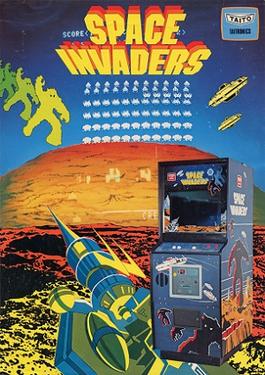
An arcade operator paid a few thousand dollars for a cabinet, then had one lever to earn it back: quarters per hour. The take was split with whoever owned the floor, such as a bar or a bowling alley. A player who lasted too long was rent going unpaid, so designers were commissioned to build games an average player could not survive for long: escalating alien speeds, narrowing corridors, tightening timers. A credit was tuned to last a couple of minutes, long enough to hook you and short enough to need another coin. From the mid-1980s a continue countdown let you pay within about ten seconds to keep your run, and two-player versus games made the loser pay again to get back in.
When the cost is visible and capped by what you choose to put in, and each turn is short enough to be a treat. It is the most honest meter in gaming because you can watch every coin go.
Computer Space (Nutting Associates, November 1971) is widely regarded as the first mass-produced coin-operated video game, and Nolan Bushnell's Atari followed with Pong, whose test machine at Andy Capp's Tavern in 1972 reportedly jammed with quarters within days. Before that, Spacewar! had been free university property. Gun Fight (Midway, 1975) buried a microprocessor in the cabinet so designers could tune your odds of losing in software. By 1982 US arcades reportedly took in about $8 billion a year in quarters, with Space Invaders, Pac-Man, Donkey Kong, Galaga and Defender tuned for turnover and high-score tables giving a short life meaning. Street Fighter II (1991) pointed the same trick at another human: the winner stayed on and the loser paid again. When the PlayStation and Dreamcast closed the graphics gap by the late 1990s, Western arcade revenue went with it. Many modern prompts trace back to this coin slot: 'insert coin to continue', energy timers and 'pay or watch an ad to keep going'.
Historical prices and revenues are in US dollars at the time unless marked A$.
Pong's prototype coin box (a modified milk jug) reportedly jammed solid with quarters within days; Bushnell later estimated $35-40 a day, roughly four times a typical pinball machine.
By 1982 the US arcade industry was reportedly taking about $8 billion a year in quarters, more than the recorded-music industry (about $4bn) and Hollywood box office (about $3bn) combined.
Midway's Gun Fight (late 1975) was the first arcade video game built around a microprocessor, replacing hard-wired logic.
The 'continue' countdown (insert a coin within about ten seconds) is often traced to SNK's Fantasy (1981) and stayed rare until Atari's Gauntlet (1985).

Covered in Video Games & Money: Ep 2 · Coin op, Ep 4 · Arcade golden, Ep 8 · Arcade versus.